The first portion of this series covered the incorporation of the Village of Cambridge on 16-Apr-1866. Now we’re covering some major, subsequent steps along our village’s 150-year history. Last week we talked about Cambridge schools from 1799 to 1873. This week we complete our coverage of Cambridge schools.
1891, One School, finally
In 1873, the East End and West End had yet another heated disagreement, this one resulted in two separate schools. Almost twenty years later, in 1891, the Village finally created one school. J.B. Rice donated land next to his Seed House. A new school, located halfway between the East End and West End, was built on the old Cambridge Swamp.
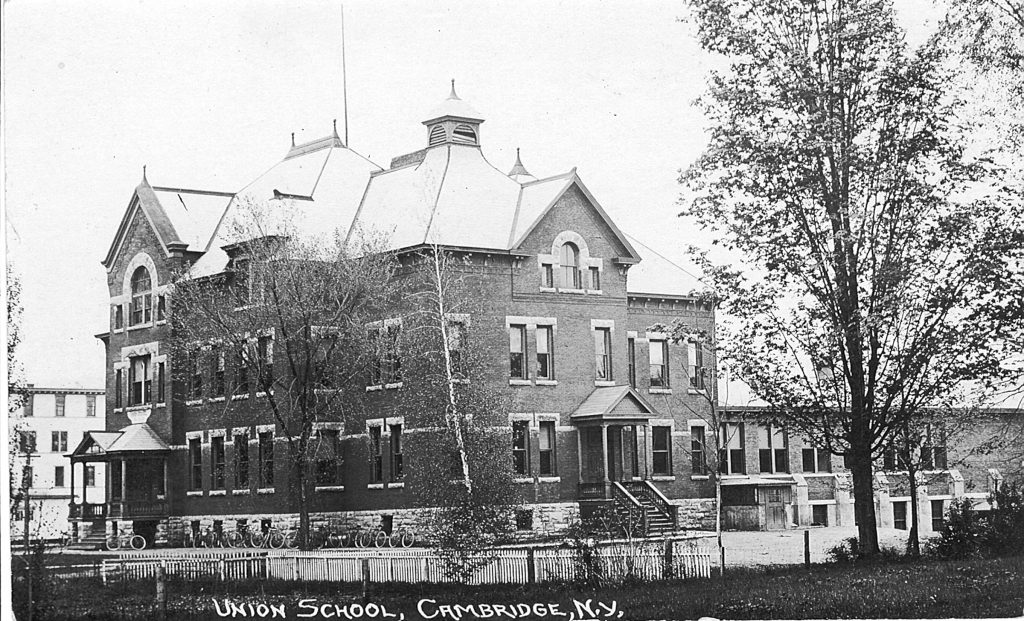
The school had no gymnasium until 1914 when the Hubbard Annex was built. The basketball team played their games in the old White Church at the traffic light. The track team ran races at the Cambridge fair horse track.
1927, Cambridge says “no thanks” to state aid
In 1927 NYS created the Central School Act to encourage consolidation. The 276 one-room schoolhouses in Washington County were expected to merge into 11 central schools. But Cambridge has other plans. Once again, the East End and West End couldn’t agree and refused the state aid. A few years later, NYS added transportation aid to the program to further encourage consolidation. Cambridge said “no thanks”.
Sports
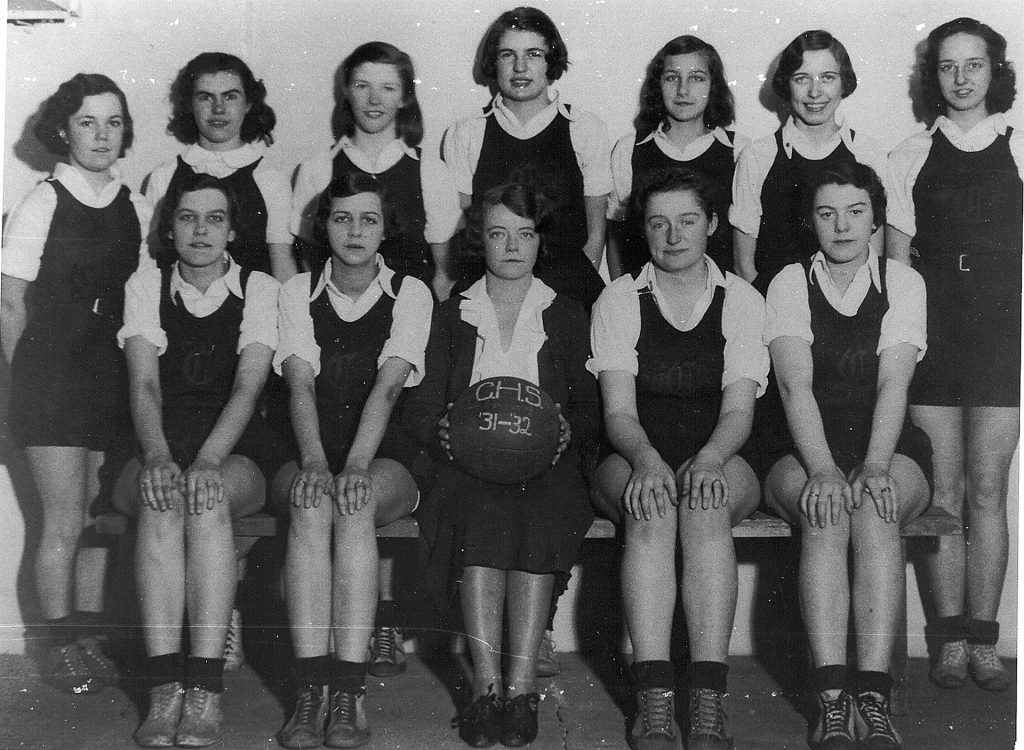
The Cambridge girls were becoming a dominant force in local sports. The girls went undefeated for seven years in basketball. They defeated Berlin 81-2 to open the 1930 season. Dot Burch (Benson) scored 72 points in a single game. During the same period, the boys game rarely saw a team score more than 15 or 20 points. In fact, Dot’s 72 points in a single game were more than the entire boys team scored in every game combined that year.
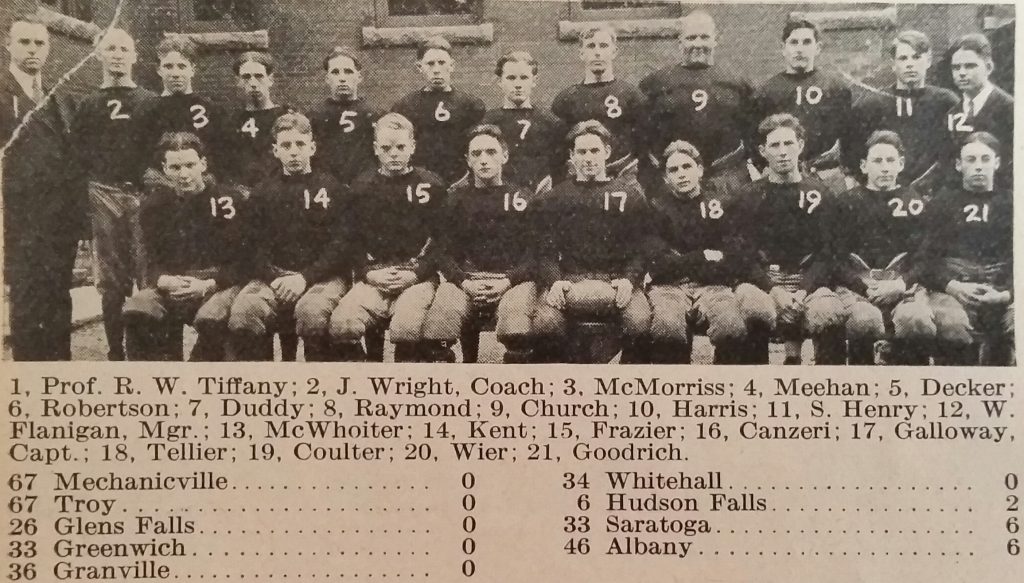
The Cambridge boys had many successful sports teams during this era, none more so than the 1925 football team. Led by Nick Canzeri and John Galloway, Cambridge went 9-0 outscoring their opponents 348-14. For the second year in a row, CHS defeated Albany High School to win the Eastern NY Public High School Athletic League. Martin Church, an 8th grader, stood 6’4” and weighed over 300 pounds, making him no match for the opposing teams’ linemen who rarely weighed more than 140. Later Martin would be well known in these parts as a tuba player in many local bands.
The girls’ physical education program started in Cambridge schools in 1927. The boys’ program wasn’t begun until 1933. In the 1940s there was a rifle range on the third floor of the school (hey, kids, don’t forget to bring your guns to gym class tomorrow!).
Central School
The Cambridge Central School District #10 was formed in 1944. Following World War II, the baby boom and the closing of one-room schoolhouses led Cambridge to decide it was time to build a new school. In 1946 several debates and votes were held but little could be agreed upon.
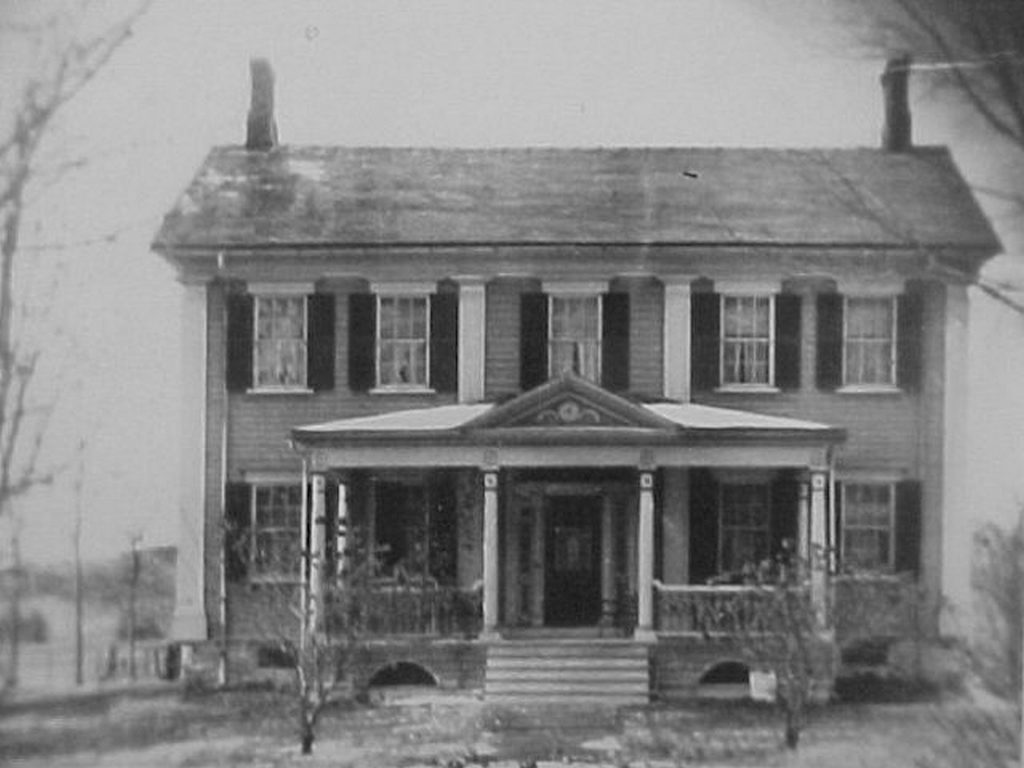
My great grandfather Hitchcock’s farm on the west side of South Park Street was purchased as the location of the new school over loud protests. West Enders, such as Frank Pemrick, were convinced the property was quicksand and any new building would quickly sink out of sight.
At the school budget vote in June 1947, tempers flared. The police had to be called to the school. The resolution to build a new school was narrowly defeated.
1947 School Fire
Then mysteriously (some say suspiciously) the Cambridge Union School caught fire around 1am on Monday 18-Aug-1947. With the beginning of the school year only weeks away, the community made arrangements for classes to be held in churches, Patrician Hall, Grange Hall, Rice Seed, and Coila School.
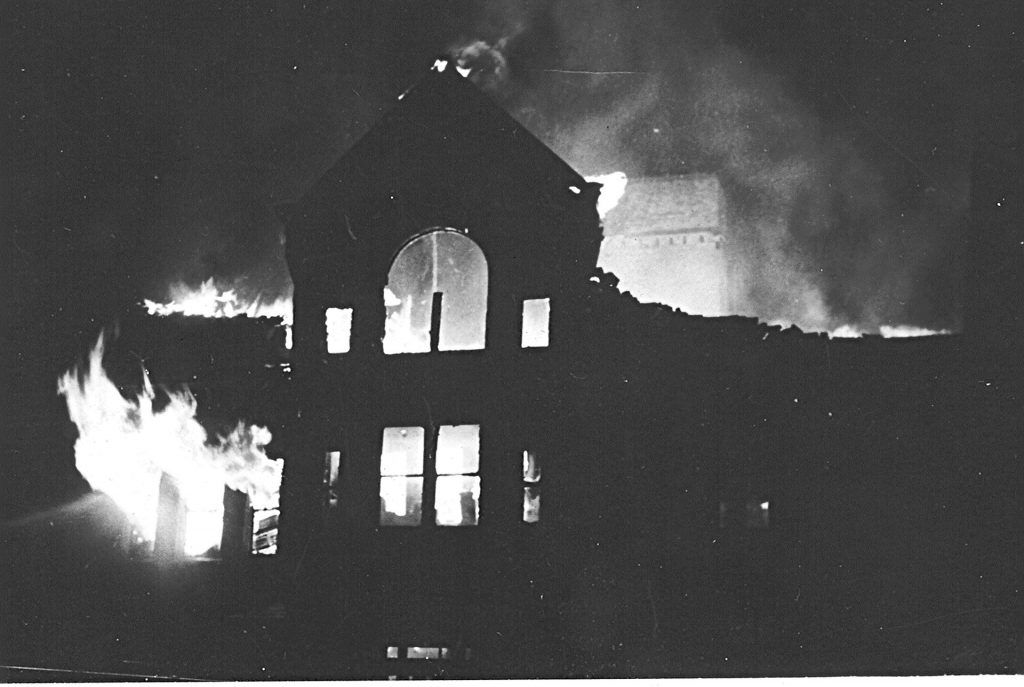
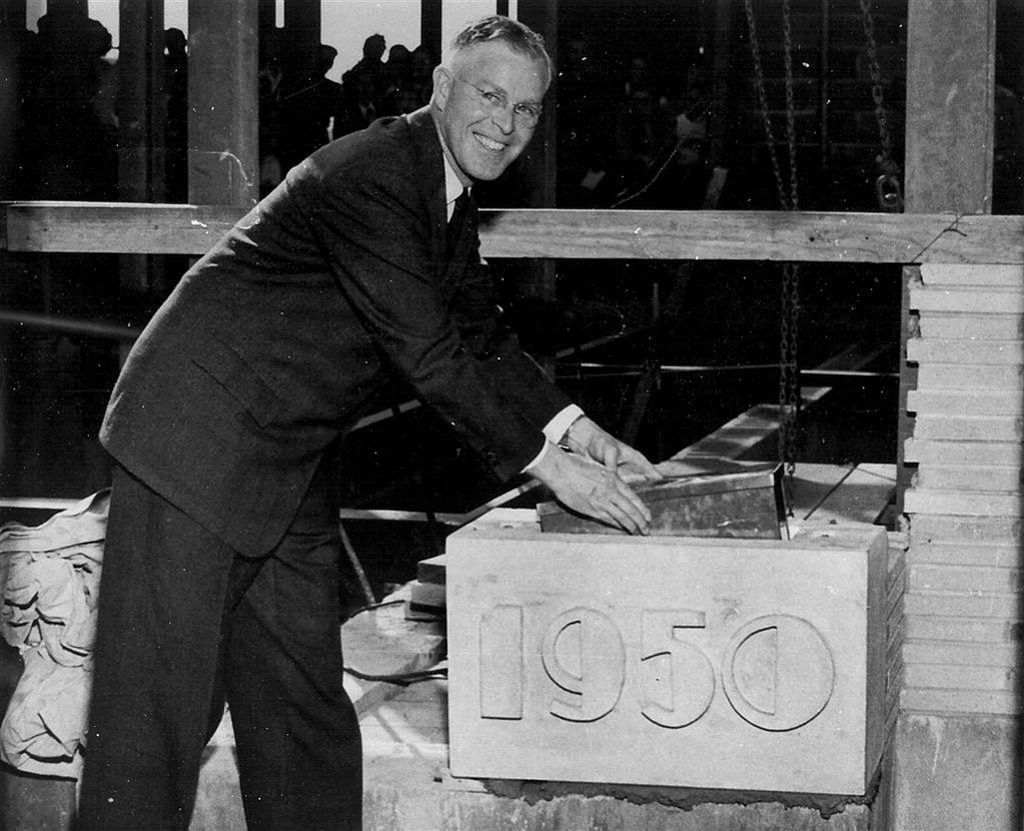
With the old school gone, progress toward a new centralized school should have been rapid. But the East End and West End continued to argue and debate. When Clarence Coulter laid the cornerstone of the new school on 18-Sep-1950, the plans for the new school had not yet been agreed upon. In fact, the plans for the new school that were published on the front page of the Washington County Post look nothing like our current school building.
Too Small
In Sep-1951 the new school opened its doors. But the East Enders and West Enders had been so busy arguing over construction costs that the new school was soon too small to accommodate the student body. The first addition was voted in 1957 followed by two more additions over the next ten years.