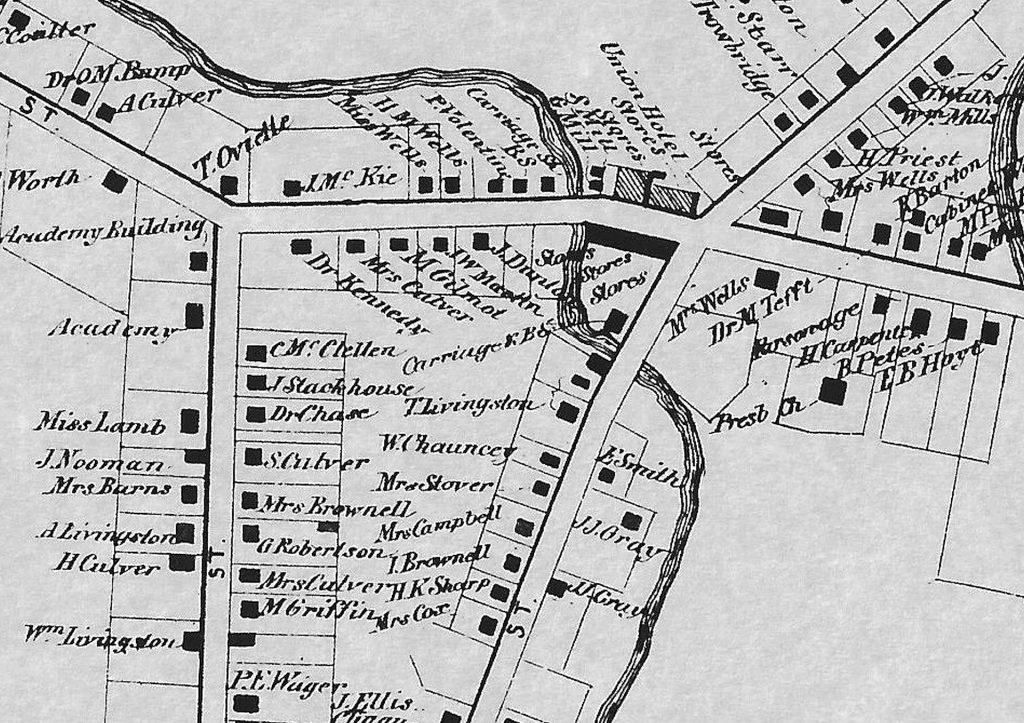
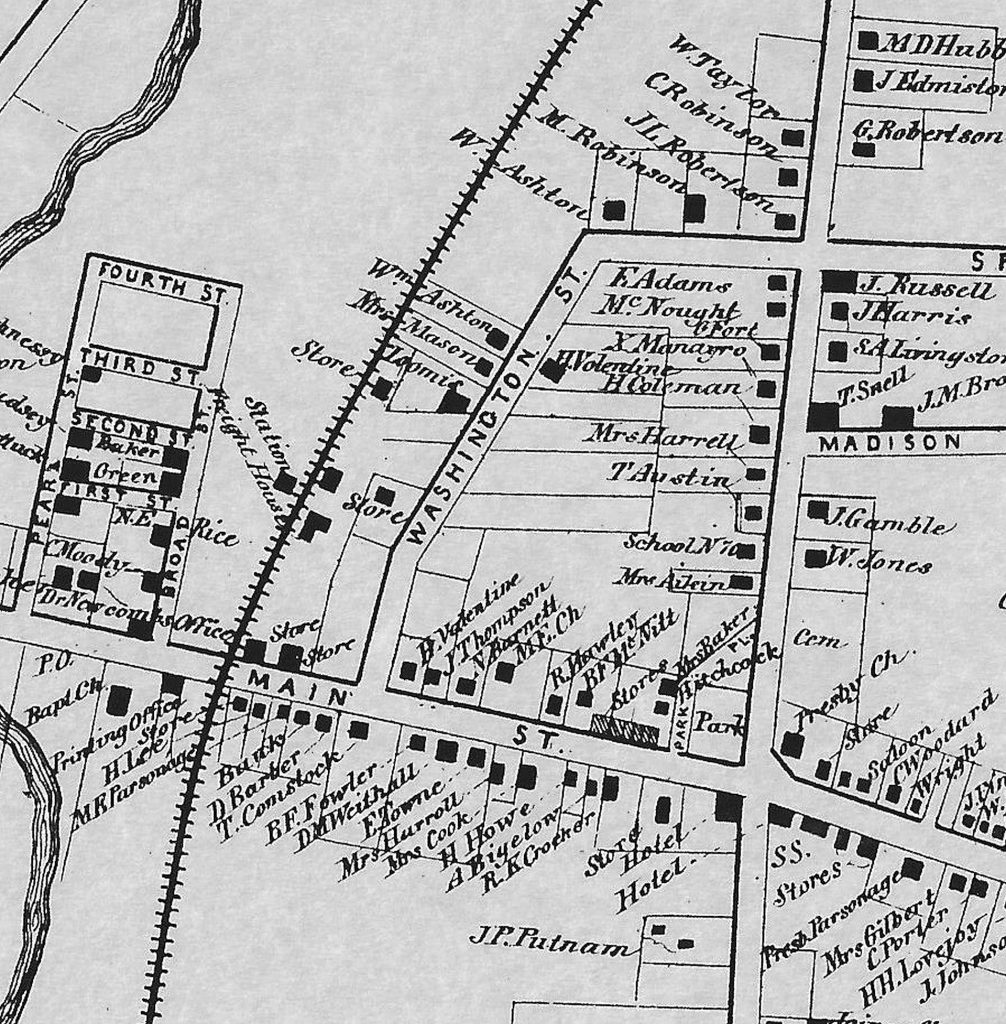
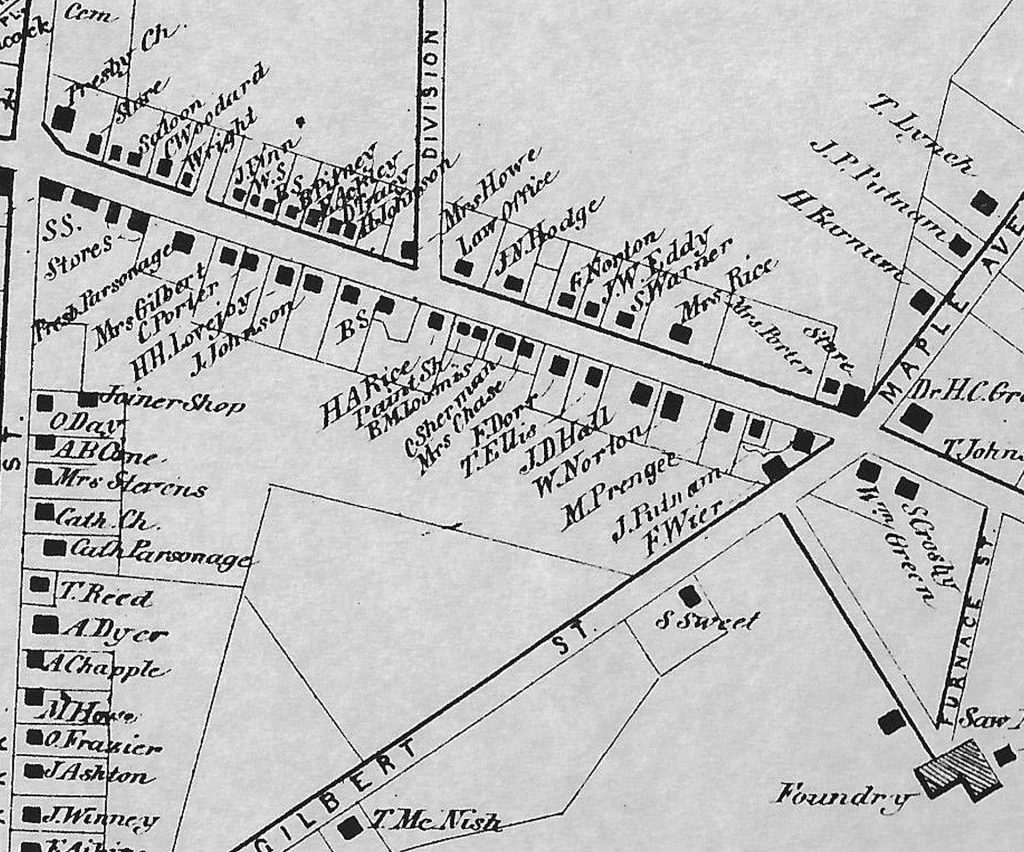
On 16-Apr-2016 the Village of Cambridge celebrated the 150th anniversary of its incorporation. Over the past nine weeks we’ve talked about all the obstacles that had to be overcome in order to unite the West End and the East End. This week we’ll review the incorporation charter and the village bylaws to take a look at what regulations were important to the village residents in 1866.
In my articles I’ve referred to Cambridge Corners, North White Creek, and Dorr’s Corners but in the charter it required a page and a half to describe the legal boundaries of the village. Then it took only one sentence to show that the village, while united, was still divided. “… the territory included in the above bounds shall be and constitute two separate road districts, the dividing line of which shall be the railroad”.
My entire life I have referred to the two sections of Cambridge as the West End and the East End. The official names of the two separate post offices prior to 1866 were Cambridge and North White Creek. Hoping to unite the two ends without losing the individual identity of each, the incorporation papers chose to keep them separate by using new terms: West District and East District.
I’ve never been able to discover why the railroad tracks were chosen as the dividing line between the two districts. In 1816 the original Town of Cambridge was divided into the current three towns of Cambridge, White Creek, and Jackson. At that time, the Northern Turnpike was chosen as the boundary between the towns of Cambridge and White Creek.
[note: The Northern Turnpike extended from Lansingburgh to Granville as part of the only major direct route from NYC to Canada. The turnpike passed over Buskirks Bridge, up Oak Hill, onto Turnpike Road, along South and North Union streets, connecting to Rt 22 by Woodland Cemetery. The next time you’re shopping in the IGA, look out front and you’ll see the green signs marking the boundary of the towns of Cambridge and White Creek].
So, we had one village but right from the beginning it was divided into two districts. And these two districts wanted to maintain at least some of their independence. The village charter went on to say “… the highway tax shall be worked in the district where assessed.”
But that wasn’t enough. The village charter also states “… there may be two fire companies, one in each district, and there shall be six trustees, three of whom shall reside in each of the said road districts”. But they weren’t done yet. “… two street commissioners, one in each road district, …, two police constables, one in each road district”.
When a new corporation is created, the charter lays out the guidelines for its operation. These guidelines address the major issues and concerns that led to the incorporation in the first place. Here is a list of the duties of the original village trustees: (1) to prevent vice, immorality, and prostitution; (2) to preserve peace; (3) to prevent and quell riots; (4) to restrain and suppress gaming houses; (5) to prohibit all caravans, circuses, and theatrical shows; (6) to prevent and punish drunkenness and disorderly conduct; (7) to prevent horse racing in the streets; and (8) to restrain the running of horses, cattle, swine, and sheep on the streets.
Wow, sounds like Cambridge was a wild place in 1866.
One year after the initial incorporation our village charter was amended for the first of six times. The first year included two major changes. First, two new positions were created for village assessors, one in each district, of course. Second, the number of police constables was increased from 2 to 6, with 3 being in each district. Based on these changes it sounds like (a) there were many disputes over assessments and taxes; and (b) the wildness in our streets was more than could be handled by two policemen.
The village bylaws give more evidence of the concerns on the minds of the early village residents.
The first dozen or so bylaws addressed animals running wildness in the streets: (1) village pound master had to take up any cattle, horses, swine, or geese running freely in the village; (2) illegal to let cattle, horses, swine, or geese graze in the village park; (5) no horse racing in the street; (6) no tethering a horse to a village tree.
Many of our village bylaws focused on the odor resulting from dead animals in the village: (1) any slaughter house in the village had to control the smell from killing animals; (2) a daily fine for any person leaving a dead carcass of horse, cattle, or swine in the streets; (3) all stables and cow yards in the village must be kept clean using disinfectant agents.
With each amendment to the village charter, new bylaws were introduced to address current concerns. Some 1870s bylaws included (1) $1 fine for throwing kitchen slop into the street; (2) no velocipede or 2 or 3 wheeled vehicle allowed on sidewalks; (3) illegal to explode gun powder in the village; (4) no playing ball in the village streets or parks; (5) no playing marbles on the sidewalk.
This concludes the portion of this series focused on the incorporation of the village. Next we’ll be covering the history of the village after 1866. We’ll start next week with a look at the formation of the Cambridge Fire Department