I started this series in February as part of the celebration of the 150th anniversary of the Village of Cambridge (incorporated on 16-Apr-1866). Then I decided to extend the series until July when the Village and the Fire Department have their big celebration (check out the schedule for Saturday 16-Jul).
Here I am at the last article and there is so much history that I didn’t have time to cover. The demands of my day-job prevent me from continuing with a weekly article, but I’m going to do my best to submit an article each month since I have so many more stories to tell.
I have created a book containing all 20 articles and 75 photos from this series. Proceeds from the sale of the book will go to local organizations to help them continue the story of our community.
I want to thank The Eagle for graciously granting me the space to tell my stories. With all the current events that they have to pack into each week’s edition, I’m sure it was often a challenge to find space for my “old news”.
Old Home Week, 1916
One hundred years ago, Cambridge celebrated the perfect storm of anniversaries. 1916 was (1) the 100th anniversary of the separation of the Old Cambridge District into the current 3 towns of Cambridge, White Creek, and Jackson; (2) the 50th anniversary of the incorporation of the Village of Cambridge; and (3) the 25th anniversary of the opening of the Cambridge High School.
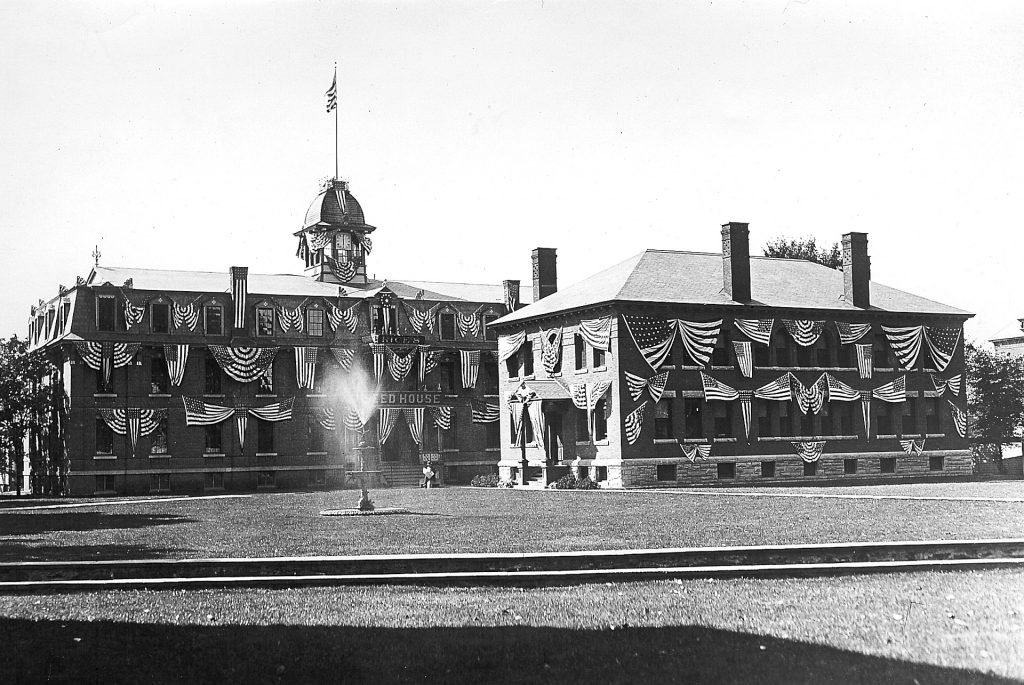
The three-day celebration started on Sunday 10-Sep-1916. The three days focused on, in order, (1) historical religious interests; (2) educational interests; and (3) civic interests.
Toward historical religious interest, the pastor of each church spent the sermon on Sept 10th describing the history of the church and its key individuals. [note: if you are ever looking for a history of your church up to 1916, go the library and browse the blue Old Home Week book containing all the sermons from that Sunday]. Sunday afternoon, on the lawn of Rice Seed, speeches were given on the “contributions of the rural communities to the moral and religious betterment of the country”.
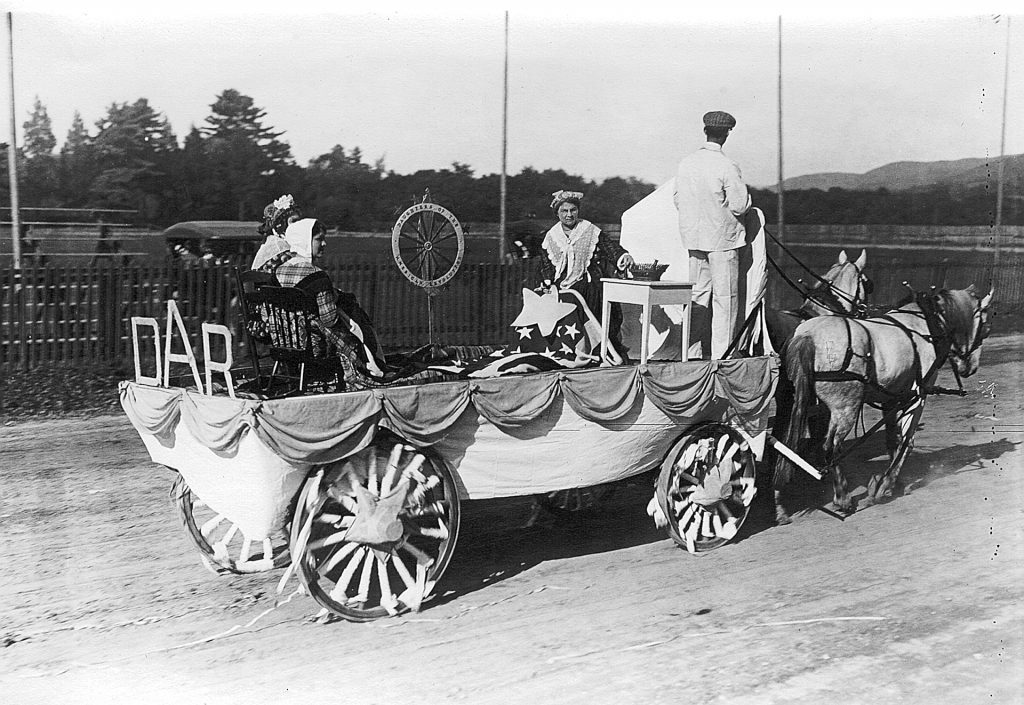
Toward educational interests, on Monday students throughout the towns and village dressed in white and carried Stars and Stripes as they marched through the village. The parade ended on the school lawn [note: this is the old school by the library]. The students sang songs accompanied by the bands. They ended by singing My Country Tis of Thee.
Continuing with the education interests, at 3 pm on Monday everyone gathered at the grandstand at the fairgrounds. Dr John H Finley gave a short address of the history of location education. This was followed by BoE president presiding over short, reminiscent speeches. Special music was provided by the band and chorus.
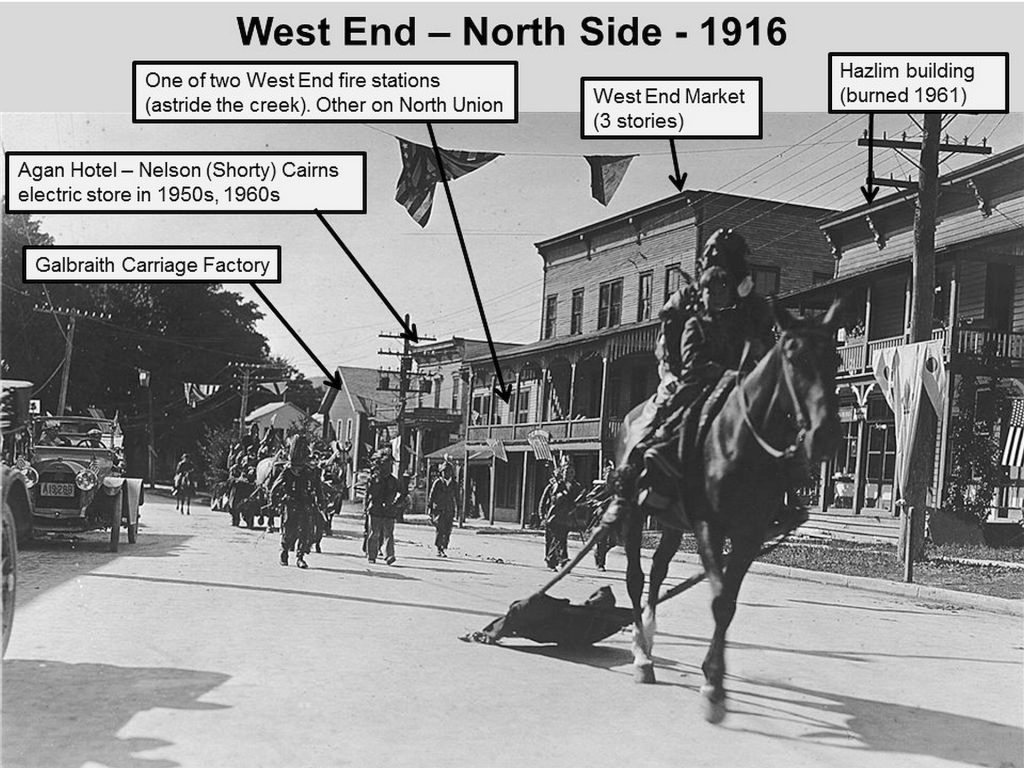
Toward the third interests (civic), on Tuesday morning there was an automobile parade through the village streets, followed by leisurely drives throughout the countryside. Everyone returned to the village by noon for the Basket Picnic. At 2pm the Parade of Grand Pageant began. The parade was divided into 3 sections, one focusing on events from 100 years ago, the next focusing on events from 50 years ago, and the third focusing on events from 25 years ago. The order of the entries matched a chronology of the area’s history.
Wrapping up
As I wrap up this series, I still have so many stories and so many photos to share. Here are two random tidbits to close out this series.
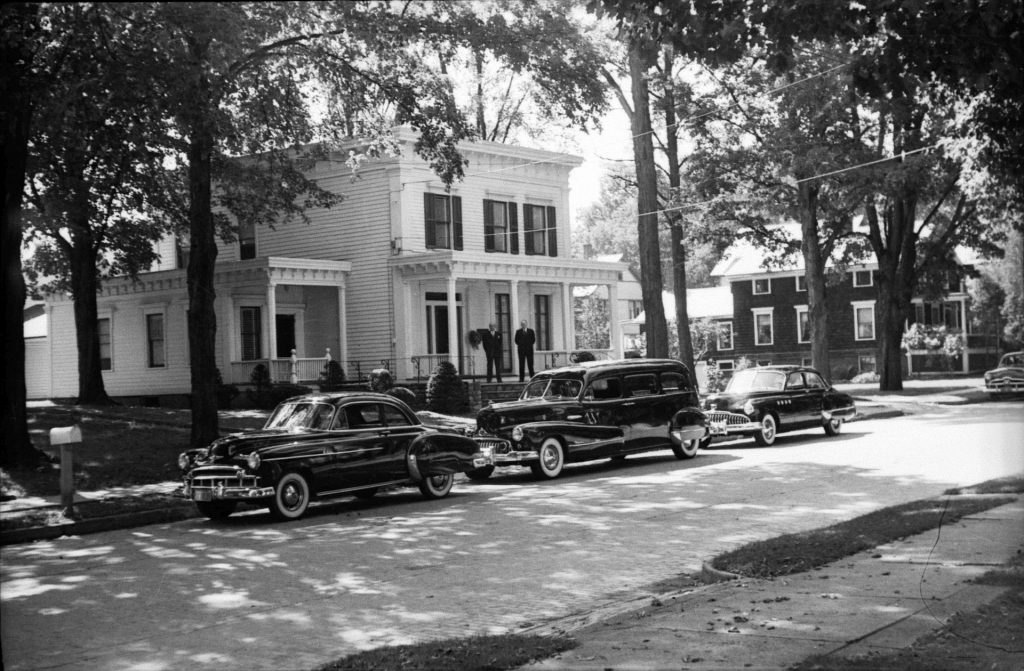
First, is a 1949 photo of the O.K. Spurr funeral home on West Main. Spurr is standing on the porch with Bernard Parks. The hearse in front looks like the one that Beaver Ross restored a few years ago when Elizabeth and he ran the funeral home.
This photo is courtesy of Spurr’s son, Kirk (CCS class of 1948). Orson Kirk went by O.K. officially but everyone called him Pete. His wife, Mianda (no, not Miranda), hated her name and as a child just wanted to be a Plain Jane. Typical of a small town, two people named O.K. and Mianda were known as Pete and Jane.
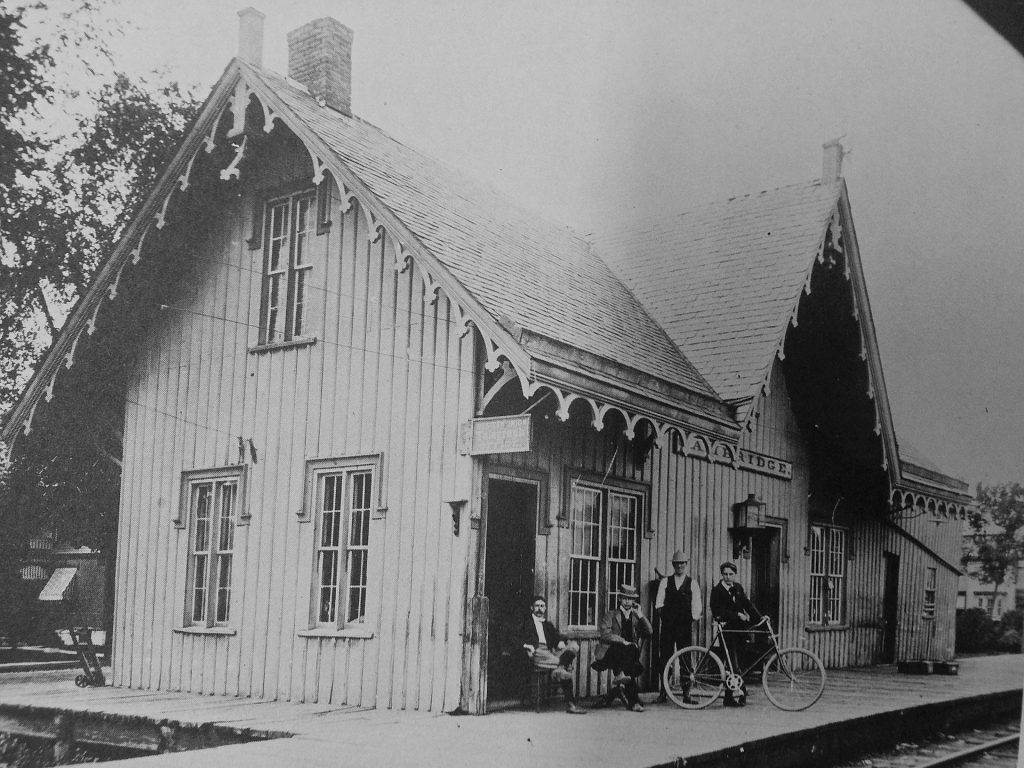
Second, is a photo of the original Cambridge railroad depot. It was erected around 1852-53 when the Washington and Rutland railroad tracks were laid through Cambridge. In 1902, this building was moved to the southeast corner of Myrtle Ave and Pleasant Street and the current depot was built. Drive down Myrtle Ave today and check out this piece of Cambridge’s history.
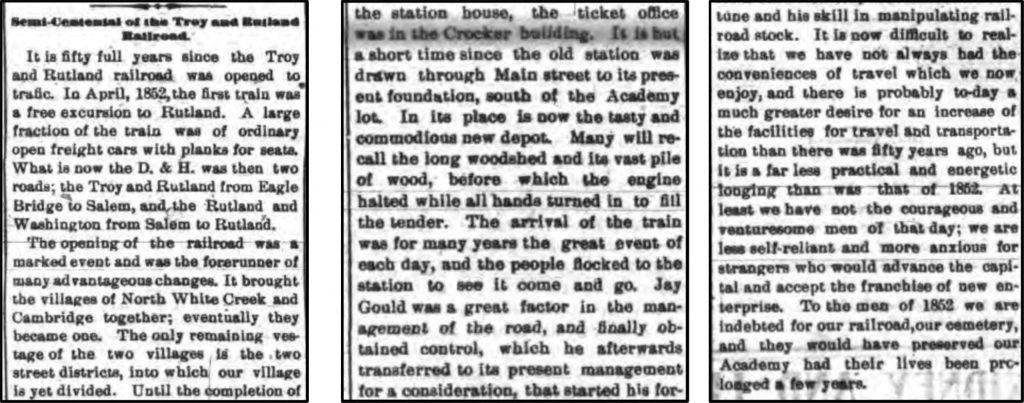
This article in the 2-May-1902 County Post (one of many names our Wash Cnty Post newspaper had over the years) talks about the original 1852 depot being moved along Main Street on its way to Pleasant Street and the new depot being opened. The article says that until the depot was completed, the ticket office was housed in the Crocker Building which is today the Cambridge Co-op. (click on image to expand)