The first portion of this series covered the incorporation of the Village of Cambridge on 16-Apr-1866. Now we’re covering some major, subsequent steps along our village’s 150-year history. This week I’ll cover a hodgepodge of interesting events from our past.
GAR, 1882-1924
The Grand Army of the Republic (GAR) was formed after the Civil War as a brotherhood of veterans dedicated to helping other veterans. By 1911, there were 568 posts and 19,433 members throughout the country.
The Cambridge GAR post was named for John W McKie (1824-1864), older brother of William McKie. On10-May-1861, John raised a company of 90 men from Cambridge and the surrounding areas. He was elevated to the rank of Captain in the 22nd Regiment. In June-1861 he was promoted to Major and on 30-Sep-1862 he was promoted to Lieutenant Colonel.
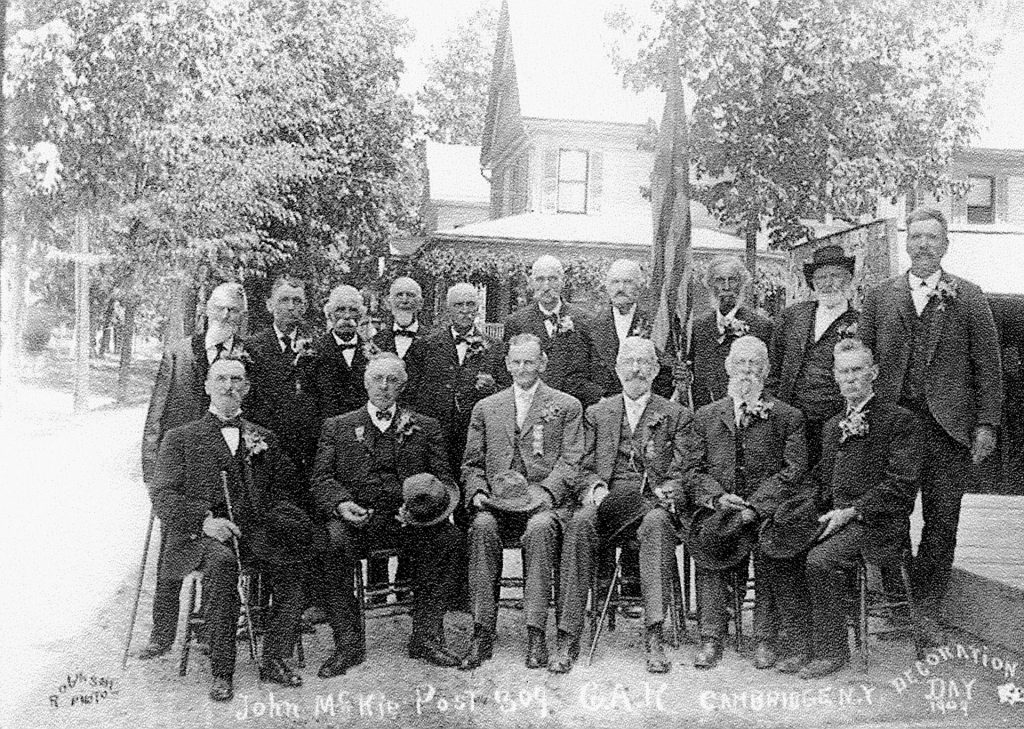
Post #309 was formed on 3-Nov-1882 with 12 veterans led by Lt. George H Overocker. They met on the second floor of the Fuller Block, a 3-story building located about where The Bog parking lot is today on Upper East Main. The 1909 photo shows 16 members. There were 5 members on 12-Feb-1924 when Cmdr Willard Lawton disbanded the post.
Hospital, 1917-2002
Edwin McClellan’s estate, Meikleknox, was located on South Union Street (today The Mansion assisted living). His brother Robert’s estate, Northwood, was located on North Union Street (today Common Sense Farm). In 1916 they decided to build a hospital named after their mother, Mary. The logical choice was halfway between their estates, placing it on Spurr’s Hill at the northwest corner of West Main and North Union Street.
However, the outbreak of Infantile Paralysis in NYC in the Fall of 1916 caused a panic throughout the state and the plans for the hospital were increased. A new, larger site was chosen, the McInerney Farm atop Academy Hill.
The cornerstone of the Mary McClellan Memorial Hospital was laid on 4-Jul-1917 in a Free Mason ceremony with Charles Smith presiding. The first Trustees were R.R. Law, H.H. Parrish, John L Hunt, Jerome B. Rice, C.E. Smith, D.M. Westfall, and Edwin McClellan.
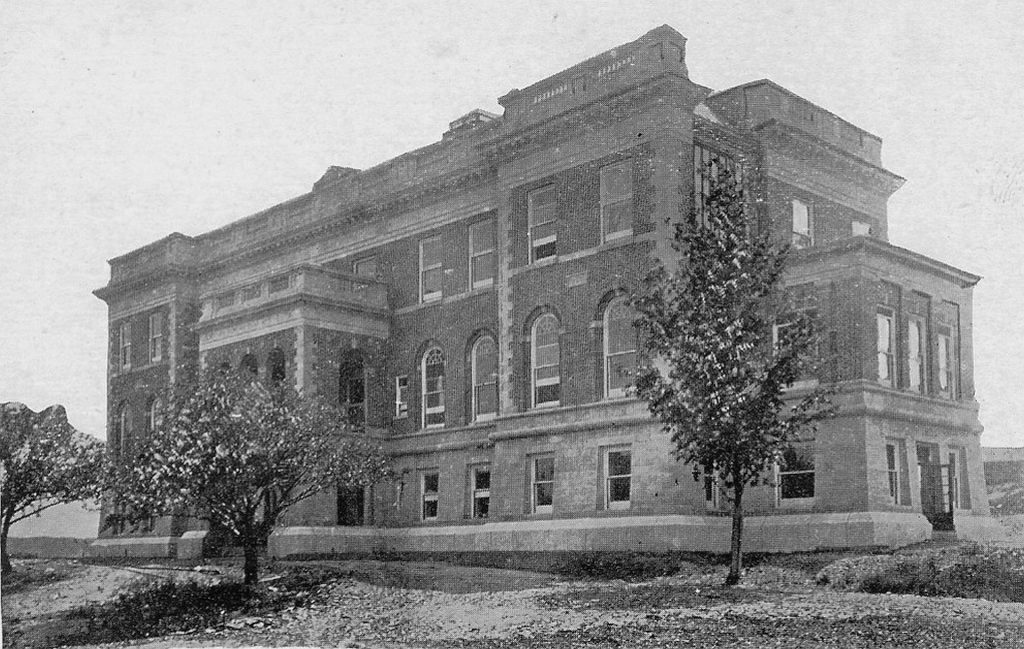
The doors opened on 5-Jan-1919. The first, and only patient, that day was Mrs. J Smith. She was admitted to room A. The first baby was Ella Mary Shannon born on 26-Feb-1919. The cost of the public ward was $3 and private room was $7. Visiting hours were 3-4pm and 7-8pm. Patients were fed from a nearby vegetable garden.
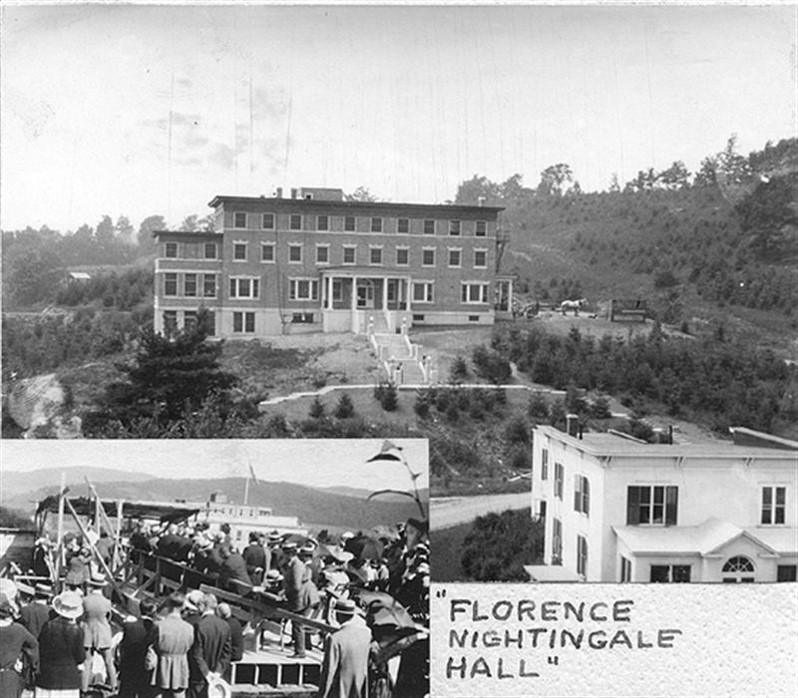
The Florence Nightengale School of Nursing opened in 1922. The school’s cornerstone was laid using same trowel used for hospital. The school was erected by Robert McClellan and his wife, Irene Ward McClellan. It was affiliated with Skidmore College and the Yale School of Nursing. Edwin McClellan, after starting his education in Jackson one-room schoolhouse #9 on Lake Lauderdale, graduated from Yale in 1884, where the McClellan Hall still stands.
The 1922 Catalogue for the Nursing School described the 4-year curriculum thusly: (1) nine months spent at Skidmore College in Saratoga; (2) three months spent at the hospital in intensive class room training in hospital principles, theory, and practice. (3) Nine months spent at Skidmore; (4) twenty four months (2 years) spent at the hospital; and (5) final nine months at Skidmore completing the Bachelor of Science degree along with a diploma from the Hospital.
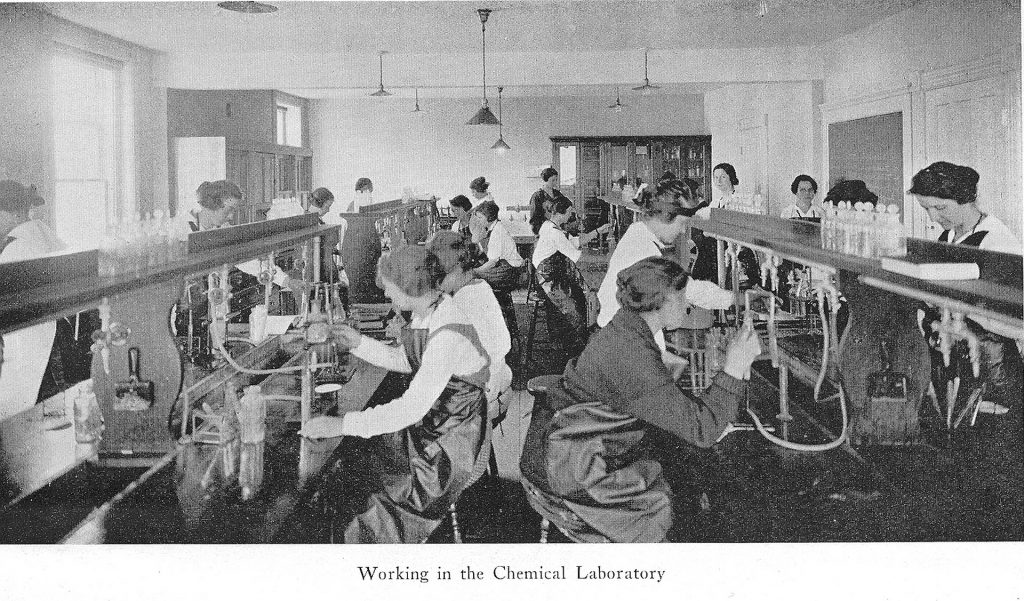
Nightengale Hall had accommodations for 40 nurses with 20 double occupancy student bedrooms on the second floor with a general bathroom area. For the administration and staff, there were another 4 bedrooms on the first floor, arranged in two groups of two, each group with its own private bathroom area.
In its first year, the School of Nursing was under the direction of superintendent M.M. Sutherland. The tuition was $625 per year which covered the classes at Skidmore plus the Hospital. The age for admission was 17 to 35 years. Skidmore College opened in 1911 and had its charter amended in 1917 to include bachelor degrees so this was a new program at a new college.
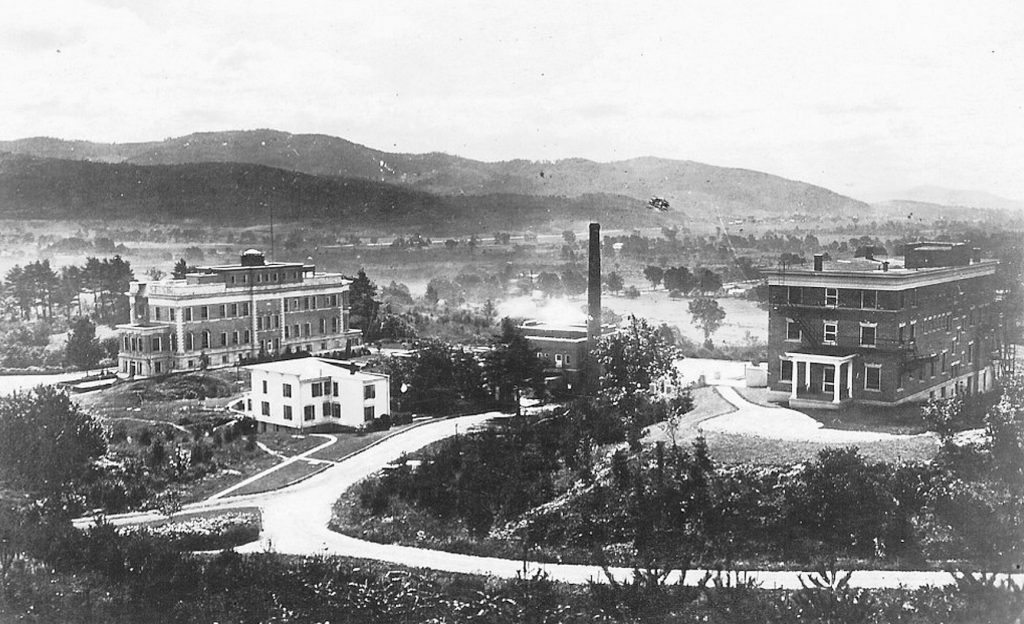
The North Wing was started in 1927 and opened in 1929. Edwin’s widow, Helen Livingston McClellan, broke ground. In attendance were three members of original 1919 staff: Dr Stanley T Fortuine (first resident surgeon), Miss Alice Boland (head nurse of private Floor) and Creasie Wright Sands (laundry). Ground floor; Store rooms, Clinic; First floor: waiting room, offices, 2 exam rooms, doctor’s office, medical library, lab, private rooms; Second floor: private rooms; Third floor: obstetrics, delivery room, nurseries.
Cambridge Valley National Bank, 1855-1970s
The Cambridge Valley Bank was organized on 15-Sep-1855 with capital stock of $115,000 which was subscribed by 137 persons. The Board of Directors elected Orrin Kellogg president. The bank started on the south side of East Main Street across from Hubbard Block in a brick building next to what we all still call King Bakery.
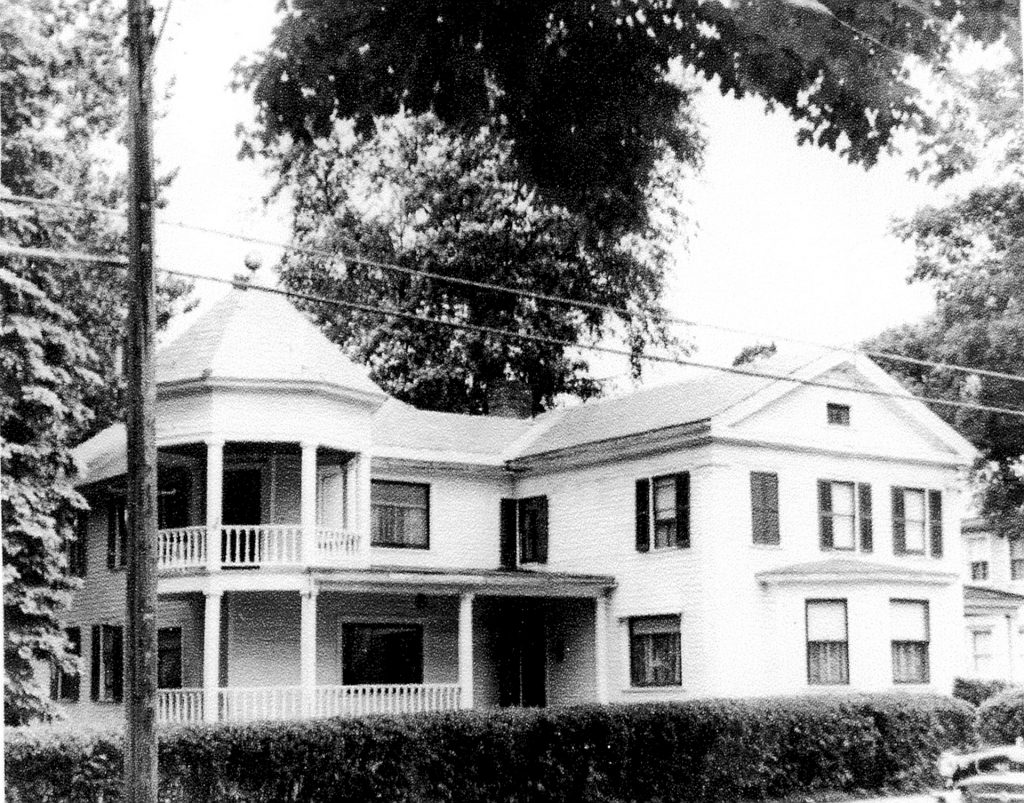
In 1865 it expanded and became the Cambridge Valley National Bank. Martin Hubbard sold the lot on the corner of East Main and Washington to the bank. The brick bank built on that corner (today Roundhouse Café) served until the early 1960s when the bank built its current home on the south side of West Main Street just west of the Public Library. To do so, they tore down the Laverty house.
The bank was acquired by Glens Falls National Bank in the mid 1970s who remains the owner today.