The first portion of this series covered the incorporation of the Village of Cambridge on 16-Apr-1866. Now we’re covering some major, subsequent steps along our village’s 150-year history. This week we’ll cover the paving of Main Street with yellow bricks and its impact on the village.
Muddy Main Street
The Village incorporation clearly laid out an East District and a West District, each having its own police dept, fire dept, and trustees. Besides the philosophical and political separations, the two districts were physically separated by the Cambridge Swamp.
In the late 1850s, after the Washington & Rutland railroad was built, local entrepreneurs encouraged businesses to move to the middle of the village. B.P. and R.K. Crocker built the brick building next to the railroad tracks (today Cambridge Co-op). But people rejected the move as travel across Main Street was still difficult following rain storms.
In 1901 the village voters approved paving Main Street at a cost of $10,000. By 1908 no work had been done and another vote was held. This time the cost was projected to be $20,000 and the voters rejected it 164-135.
By 1911 the cost had risen to $30,000. Evidently the voters were dissatisfied with the lack of progress and they approved the new cost by a vote of 153-96. By 1912 the cost had risen again, this time to $36,000. This was approved 225-10. Finally, on 14-Mar-1913 the project got underway.
Paving East and West
The East End and West End still didn’t trust each and were afraid that their tax dollars would be used to pave one end of the village but not the other. Therefore, excavation and curbing work began at Dorr’s Corners (Gilbert and Main streets), progressed to Division Street, and then all equipment was moved to the West End to do the same from Tannery Pond (Center Cambridge Road and Main Street) to Academy Street.
Dirt from the excavation was pushed from the ends of the village toward the middle to continue to fill in the swamp. As this was done, driveways along Main Street became lower than the street so dirt had to be used to raise driveways. Also dirt was used to reduce the incline where South Union Street meets West Main Street.
By 4-Jul-1913 the West End excavation was complete from Tannery Pond to the railroad tracks. On the East End curbing was in place from Dorr’s Corners to the railroad tracks. Finally, on 7-Jul-1913 the first brick was laid at Dorr’s Corners. Village President Charles Tingue placed a time capsule containing a Lincoln penny and a fireman’s badge.
Slow Going
Progress was slow. Delivery of bricks was inconsistent. Laborers were not paid regularly leading to many work stoppages. In Aug-1913, my great grandfather, William Hitchcock, took over the project, likely using personal funds to smooth out cash flow and keep the project moving.
Hitchcock’s first task was to ensure the Cambridge Fair went off smoothly. Main Street was all torn up but the fair was a huge success. In Sep-1913 the Fireman’s Muster was held in Cambridge. One story tells that sections of Main Street were so muddy that in places the parade marched on the sidewalks while the spectators stood in the muddy street.
As the 1913 election approached, the Prohibitionists held a parade against liquor licenses. The turnout was large, perhaps because people wanted to see the Yellow Brick Road, or perhaps simply because the street was dry. [note: In Nov-1913, the local vote on the Excise Tax was held. The “dries” triumphed as the Town of Cambridge prohibited liquor licenses for saloons, stores, hotels, and even pharmacies]
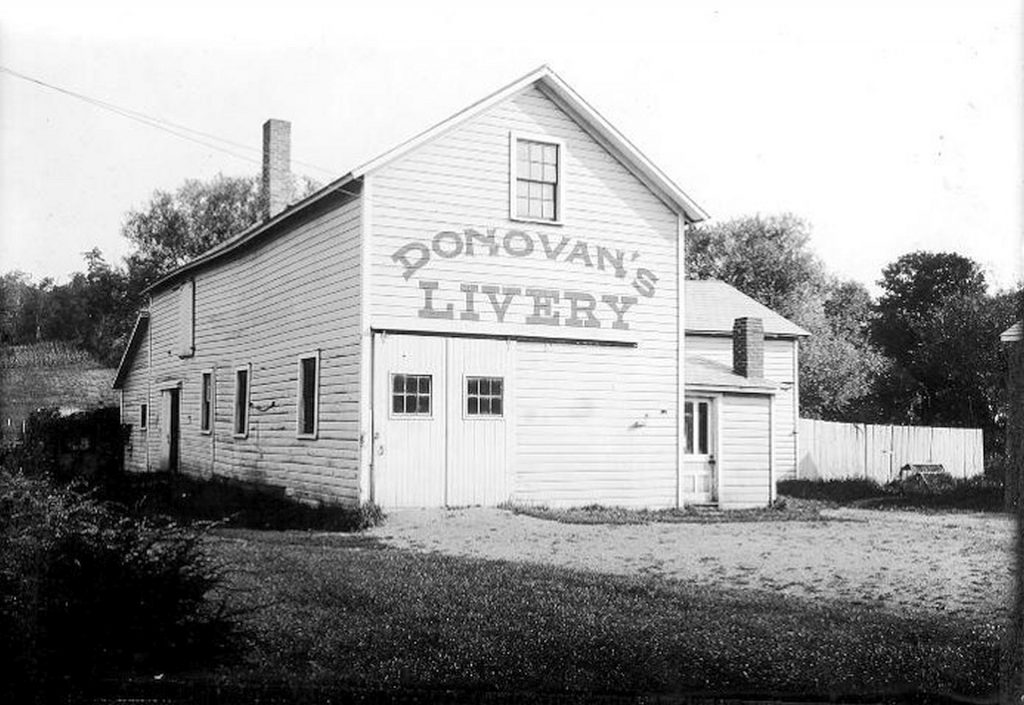
Mild temperatures that Fall allowed clean-up, smoothing, and patching right up to Christmas. With temperatures in the 80s bricks heated, expanded, and had nowhere to go except up as they were packed tightly against the curbing. When some bricks in front of Dennis Donovan’s Livery popped out, the East Enders howled with delight at the misfortunes of the West End.
The next Spring, Apr-1914, a late winter storm was followed by a heavy rainstorm. Main Street was a river since no storm drains had been engineered into the project. But that didn’t deter the residents. This was the first time in Cambridge history Main Street could be navigated during “mud time” in clean boots. The Village highway crew removed the accumulation of winter mud and debris and an impromptu street dance ensued to christen the Yellow Brick Road
Impact on Village laws
A dry, rut-less Main Street led to many new village laws.
Drivers no longer had to go slowly. In 1914 the village board approved the first speed limit, 15 mph. In 1923 it was raised to 20 mph, then 25 mph in 1939 and finally to 30 mph in 1964. Village old-timers met each increase with claims that the streets would no longer be safe [“those young hooligans will kill themselves and us, too”. Ken Gottry Sr, 1964]
In 1915 a village ordinance required all vehicles keep to the right of the center of the road. Cars used to drive in the middle of the road to avoid the mud. Later that year a village ordinance required all vehicles to park only on the right side. Previously, cars parked wherever there was a dry spot regardless of which side of the street it was on.
By 1927 most horse & buggies had been retired from service since Main Street was now smooth enough for automobiles. A village law was passed to remove mounting blocks and hitching posts. However, as you pass my brick house on East Main, you still see my mounting block on my front lawn, putting me in violation of village ordinance.
In 1960 the Village Board asked NYS to pave Main Street. However, since the state was only responsible for NY Route 372 the paving stopped at the traffic light, leaving upper East Main with its yellow bricks for a few more years.
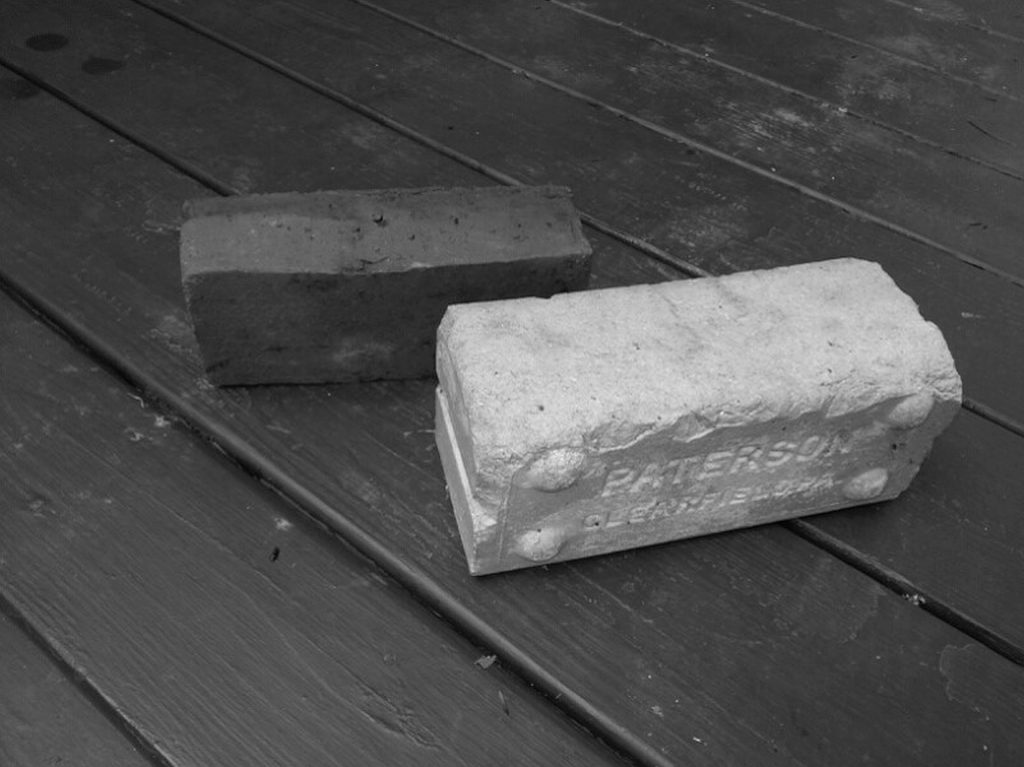
Local folklore suggests the bricks came from clay pits south of the village between Rt 22 and the Turnpike. However, our bricks are stamped Paterson Clearfield, PA indicating their true origin. Red bricks today are 8” x 3.5” x 2”. Our yellow bricks are much larger at 9” x 4” x 3”. But more interesting, today’s bricks weigh about 1 pound each. Our yellow bricks weigh 9.5 pounds each.
Today
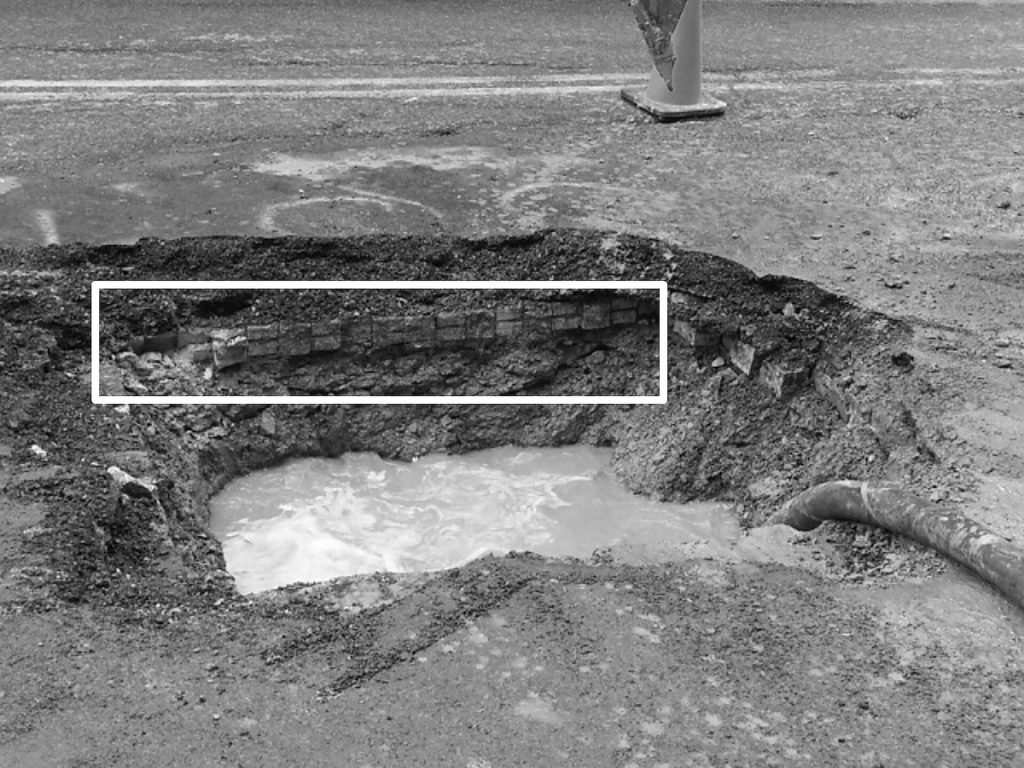
The Yellow Brick Road is still there underneath the macadam. Whenever construction tears up Main Street, you get a glimpse of our bricks. In 2005 the Freight Yard project replicated the yellow brick on their pathways. And, if you want to travel on the original Yellow Brick Road, drive or walk on Coila Road by Tannery Pond.