On 16-Apr-2016 the Village of Cambridge celebrates the 150th anniversary of its incorporation. This series explores the events that led to the union of the West End and the East End. So far we’ve learned that there were many obstacles to the union of “the Corners”, the communities stretching Main Street from Gilbert Street to Colia.
Many felt that incorporation into a village was the only way to address the need for municipal services. Others felt that services such as a fire department could best be provided by a private company. Last time we talked about the first two incorporation meetings. They were held in Feb-1866 but ended with more, not less, separation.
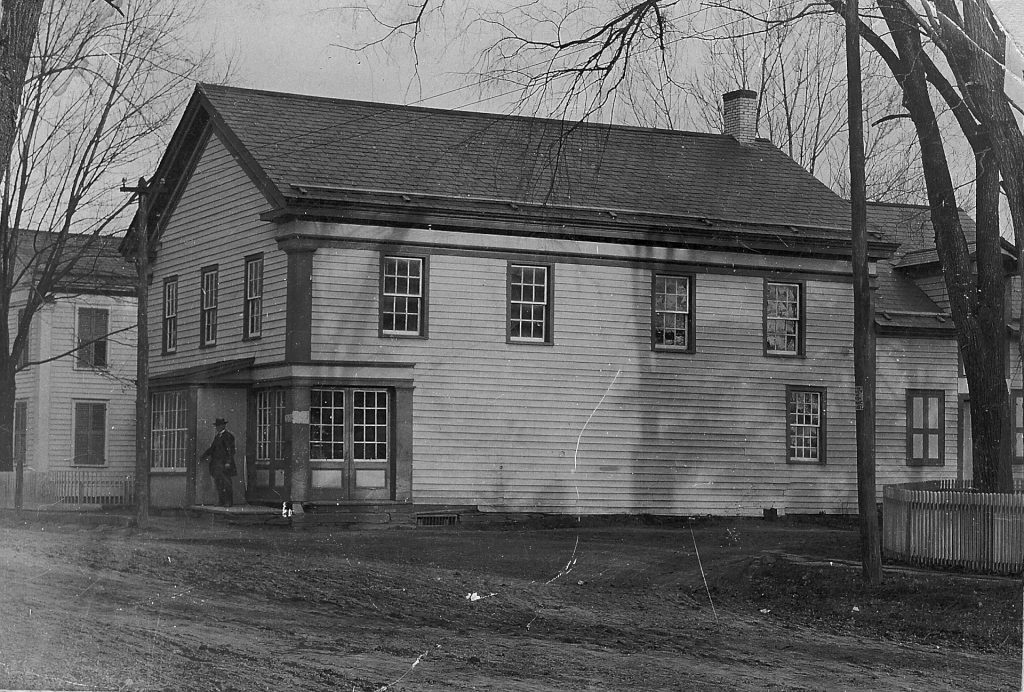
A motion was passed to incorporate the East End and Dorr’s Corners into the Village of North White Creek. The West End was upset that they were not included. Coila, on the other hand, was not upset that they were not included. Around 1850 Coila took a step to establish its separation from Cambridge Corners by creating its own post office. This was located in the Coila Store (see photo), once Stephensons and later McNaughton & McNeill. This building still stands on the corner of Content Farms Road and NY Route 372.
A committee was formed to define the Charter for the proposed village of North White Creek. It appeared as though a village might be formed, albeit one much different than what is today called the Village of Cambridge. However, as we’ve seen many times before, nothing is easy in Cambridge when it comes to getting people to agree.
First, committee member Westfall was still very much in favor of asking Cambridge Corners to join. Westfall was a member of the NYS Legislature and appeared to be dragging his heels to prevent the incorporation bill from reaching the state government before the end of the term.
One week after the vote to incorporate and to establish the committee, the East Enders met on 24-Feb-1866 in Finn’s Hall (located on the north side of Main Street between Park Street and Division Street, several buildings east of today’s Rite Aid).
The committee’s report laid out ideas for the charter of incorporation that included among other things a limit of $500 that could be raised in taxes in any given year. Someone called for a vote without being clear what the vote covered. Harmon Sharpe, the strong-willed opponent of incorporation, stood to continue his battle from the previous week. He declared that first a vote must be taken on whether to incorporate before any vote could be held on the charter of incorporation.
Proponents declared that vote had been held the previous week and didn’t need to be repeated. Sharpe declared this “a trap, where the outcome has already been decided before a vote be taken”. Shouting incurred. Confusion reigned.
As the East Enders slipped back to square-one, with no clear agreement on a decision to incorporate, Old Man Hodge suggested the only way to amicably end the meeting was all sing “one hundred bottles of beer on the wall” and retire to the barroom in Finn’s Hall. His motion was defeated.
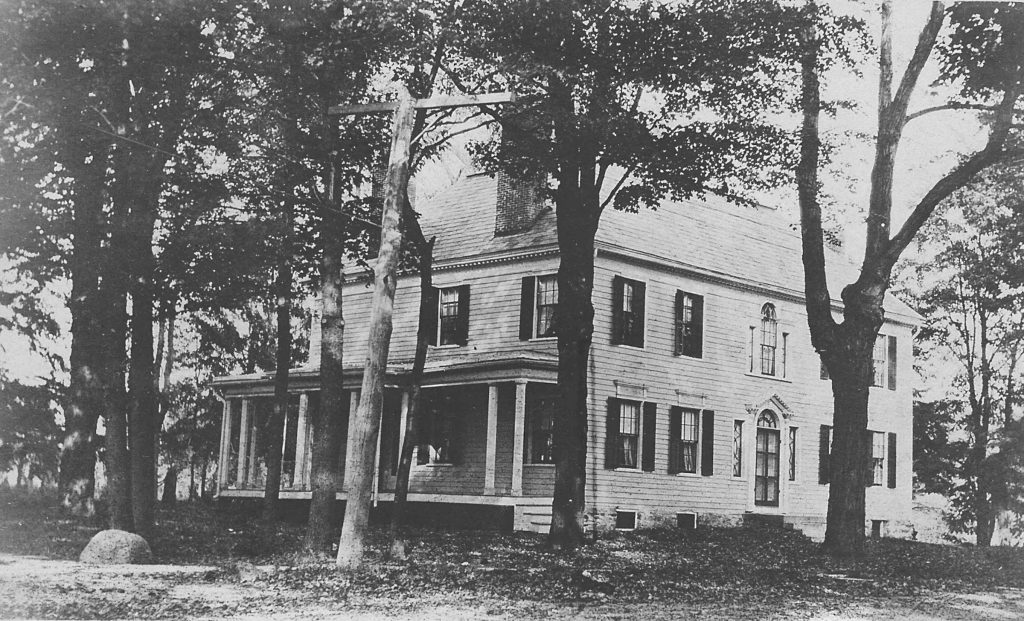
Dr. Henry Gray, brother of J.J. Gray, put forth a proposal that rather than shrink the boundaries of the incorporation they should be expanded to include all of the Cambridge Valley, from Ash Grove on the east to Coila on the west. Dr. Gray married the daughter of Dr. Jonathan Dorr and lived in the Dorr family home on the northeast corner of Main and Gilbert streets (see photo). What had been called Dorr’s Corners from the late 1700s was by the mid-1800s being referred to more and more as Gray’s Corners.
Another meeting was held, this time in the Central House (southwest corner of Broad and First streets). Women were not allowed in the meetings and certainly were not allowed to vote. The final vote was 138 against Dr. Gray’s incorporation proposal and only 68 in favor. The jubilant victors retired to the barroom to celebrate.
But R.K. Crocker wasn’t done. He encouraged some to remain behind. Crocker proposed an incorporation that included only Dorr’s Corners and North White Creek (East End) stretching westward only to Blair’s Brook (Owl Kill). Those in the barroom were informed of the new proposal and rushed back, but they were too late. By a vote of 87-2 those East Enders present had already accepted Crocker’s motion to incorporate as the Village of North White Creek.
But the vote, rather than promoting unity, split the community even more. Angered, the West End met to vote to incorporate as a separate Village of Cambridge. To the south, the village of White Creek was upset that the East End had claimed part of their name. Throughout Mar-1866 two opposing factions, one comprised of prominent men from the East End and the other comprised of prominent men from the West End, traveled regularly to Albany in an attempt to sway the NYS Legislature as to which “corner” should be the center of the proposed new village.
In Mar-1866 we were moving closer to incorporation but farther away from unity. It looked likely that a village would be formed, maybe two villages. The big question was becoming where the boundaries would be. Next time we’ll talk about the disastrous 1866 West End fire and the role it played in finally settling the question of village incorporation.